
Hi! I’m Caroline, a 35-year-old mum, and I was only diagnosed with ADHD this year. Since then, I’ve been on a journey to figure out what works for me. I’m all about holistic health and natural solutions, and while it hasn’t been an easy road, I’ve discovered some strategies that have made a real difference in managing my ADHD. Here’s what I’ve found works for me—hopefully, it can help you too!
Lifestyle Adjustments
- Creating Structure: Without structure, I feel scattered and overwhelmed. I started using a daily planner where I write down everything—appointments, to-dos, and even reminders to take breaks. Having this visual guide calms my mind and keeps me on track.
- Decluttering My Space: A messy environment mirrors the chaos in my brain. I make a conscious effort to keep my desk clean and my home organized. This simple habit creates a sense of calm and helps me focus better.
Nutrition
- Omega-3 Supplements: After researching ADHD and brain health, I started taking high-quality omega-3 supplements. I noticed an improvement in my focus and mental clarity within a few weeks. Now, I also incorporate omega-3-rich foods like salmon and walnuts into my diet.
- Protein-Rich Breakfasts: Skipping breakfast used to set me up for failure. Now I start my day with something protein-heavy like eggs or a smoothie with collagen and nut butter. It keeps me energized and helps me stay focused.
- Cutting Out Processed Foods: I’ve significantly reduced sugar and processed foods, as they make me feel jittery and unfocused. When I eat clean, my energy is more stable, and so is my mood.
Supplements
- Methylated B Vitamins: My DNA test revealed that I don’t process regular B vitamins well, so I switched to methylated versions. These have been a game-changer for my energy levels and focus.
- Magnesium: Taking magnesium before bed helps me relax and sleep better, which is crucial because poor sleep worsens my symptoms.
- Ashwagandha: I started using this adaptogen to manage stress and emotional ups and downs. It helps me feel more grounded during hectic days.
Exercise
- Daily Movement: Exercise has always been my therapy. I feel like my brain works better after I’ve moved my body. Whether it’s weightlifting, boxing, or just a walk, it resets my energy and focus.
- Find What You Love: For me, boxing is a way to channel hyperactivity, while yoga helps calm my mind. I recommend finding a form of exercise you truly enjoy—it makes it easier to stick with.
Mindfulness & Meditation
- Meditation: I started meditating daily to calm my overactive mind. I even write guided meditations now because they’ve been so transformative for me. Focusing on my breath and grounding myself helps reduce overwhelm and improves my ability to concentrate.
- Deep Breathing: Whenever I feel anxious or scattered, I take a few deep breaths. It’s such a simple tool, but it works wonders for slowing my thoughts.
- Journaling: Writing down my thoughts clears mental clutter. It’s like a brain dump that helps me sort through what’s important and let go of the rest.
Sleep
- Bedtime Routine: I realized that my ADHD symptoms are much worse when I don’t get enough sleep. I now prioritize a calming evening routine—dim lights, no screens after dinner, and a guided sleep meditation. These habits help me wind down and sleep more deeply.
- Supplements for Sleep: Magnesium and adaptogens like ashwagandha support my sleep, making me feel more rested and focused the next day.
Nature Therapy
- Spending Time Outdoors: Nature is one of my favorite ways to reset. I often take walks, and when I visit my family, I love helping in the vegetable garden. It’s grounding and clears my head.
- Grounding Practices: Walking barefoot on grass or sand is surprisingly calming. It’s a small habit, but it makes me feel connected and present.
Focus Techniques
- Pomodoro Technique: I’ve started working in 25-minute bursts with short breaks in between. It’s helped me stay productive without feeling overwhelmed.
- Breaking Tasks Down: Large projects used to paralyze me. Now I break them into smaller, manageable steps, which makes it easier to start and finish.
- Noise-Canceling Headphones: I can’t focus in noisy environments, so I invested in good headphones. They block distractions and help me zone in on what I’m doing.
Support & Accountability
- Connecting with Others: Sharing my experiences with ADHD has been healing. It reminds me that I’m not alone, and I often learn tips from others who understand what I’m going through.
- Therapy & Coaching: Working with a coach who understands ADHD has helped me develop practical strategies and stay accountable to my goals.
Here’s a suggested paragraph to place at the end of your blog post:
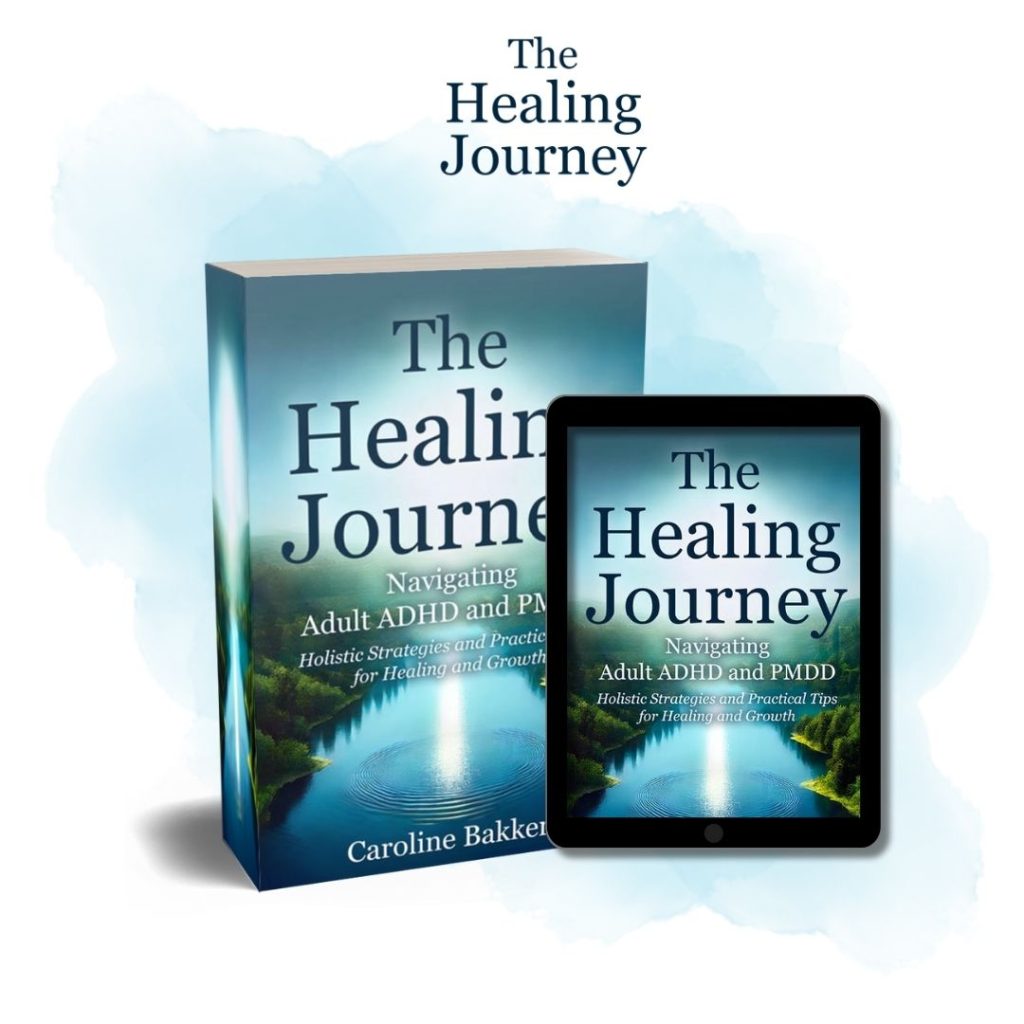
In my book, The Healing Journey: Navigating Adult ADHD and PMDD, I share my personal story of discovery and resilience, detailing how I came to understand and address the profound impact of these conditions. Through a combination of research, practical strategies, and heartfelt anecdotes, the book offers a guide to navigating the complexities of ADHD and PMDD with empowerment and hope. Whether you’re seeking to better understand your own journey or support someone you love, this book is a companion for those striving to heal and thrive.
